Bunion comfort / fit / no medical claims
Toe Separators for Bunions: Cushion, Space, Comfort
A toe separator can cushion the space between the first and second toe and reduce pressure from a shoe. It does not change the shape of the joint. This page covers fit, materials and what to expect, without promising a correction or a clinical outcome.
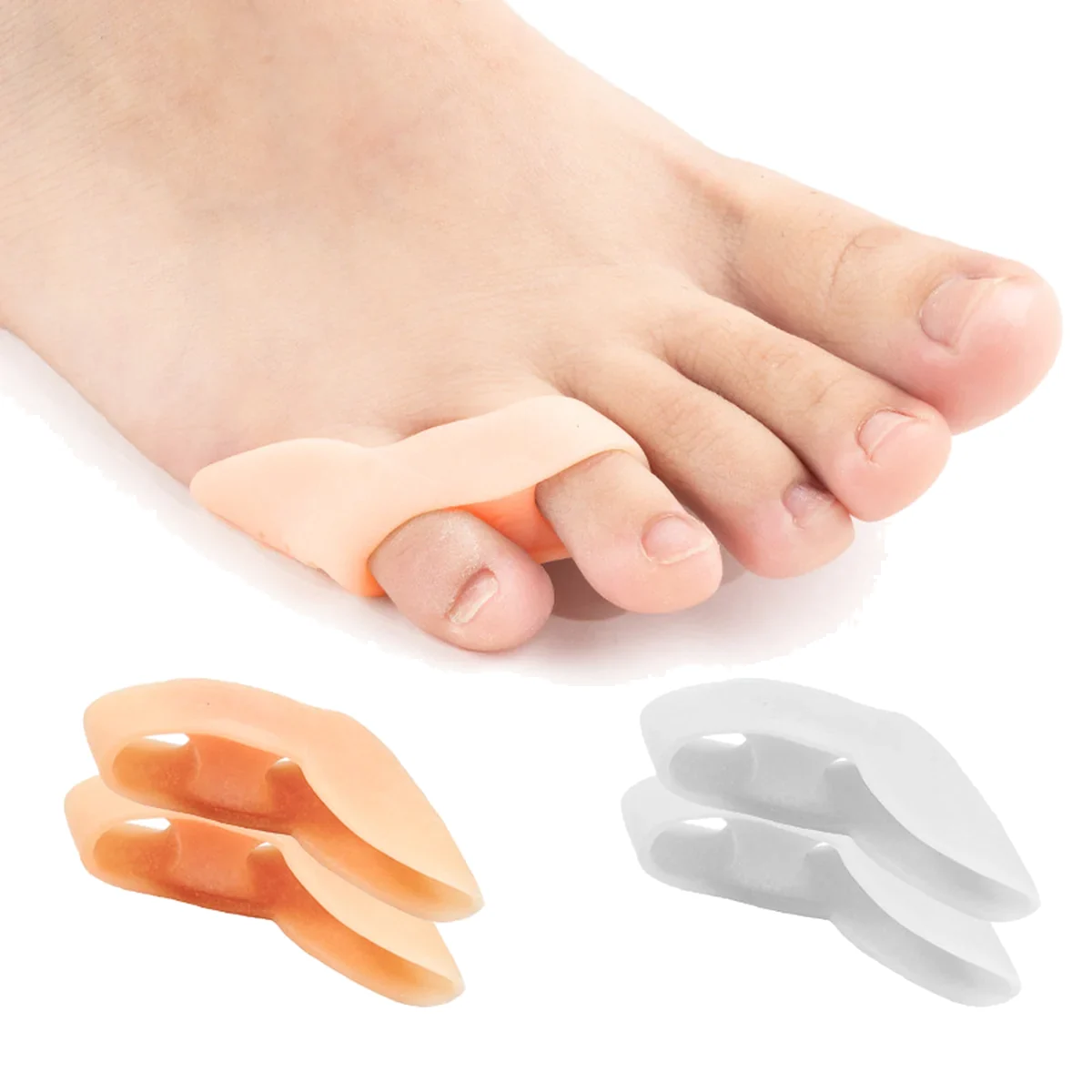
Toe separators for bunions
Toe separators for bunions: what the product does
The product sits between the first and second toe and creates a small, soft gap. In a shoe, that gap can reduce direct rubbing and pressure on the inside of the foot. It is a comfort product, not a structural correction.
A bunion is a change in the joint and the surrounding tissue. A separator does not reverse it, and it should not be sold as a clinical fix. If the joint is inflamed, the skin is broken or the pain is new, the buyer should see a clinician rather than rely on a separator.
Fit points
Three things that decide comfort
First/second toe gap
A wider loop or a thicker bridge gives more space, but it also takes more room in the shoe.
Shoe volume
A soft separator can still crowd a pointed toe box. Test it in the shoe the customer will wear.
Skin sensitivity
A smooth surface and a soft compound matter more than a high hardness number.
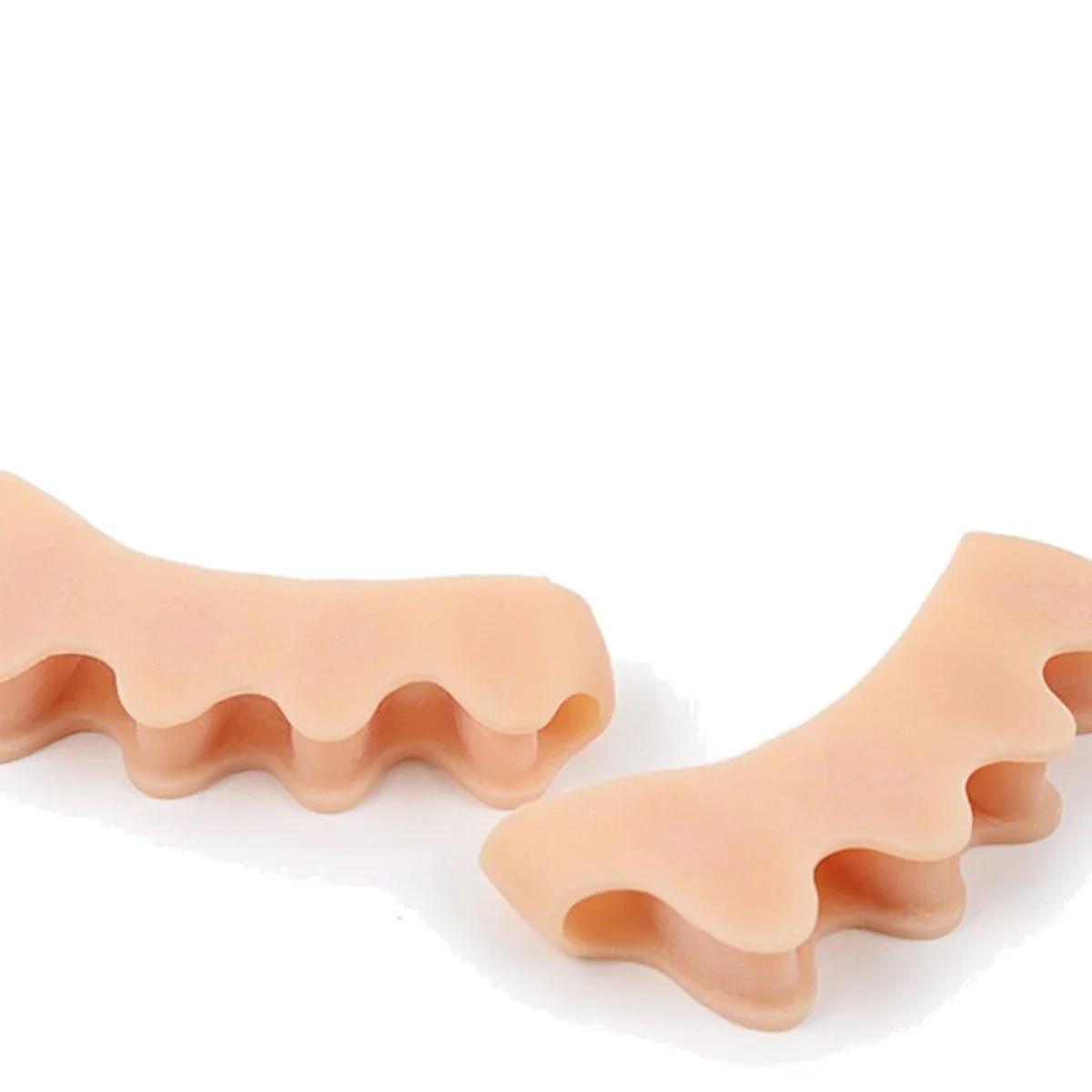
Gel vs silicone
Two materials, two different feels
A gel compound feels softer and more forgiving on the skin. A silicone shape holds a more defined gap and can be easier to clean. Neither material changes the joint; the difference is comfort and fit.
We sample both when the buyer is unsure. The sample is worn in the shoe for 20–30 minutes, then the buyer chooses the material and the loop shape.
- Gel: softer feel
- Silicone: defined gap
- Loop: isolated big toe
- 4-hole: broader spacing
Material comparison
Which route fits the brief?
| Gel / SEBS gel | Soft, translucent, low-profile feel; good for a retail pack |
|---|---|
| Silicone | More defined shape, easy to clean, good for a reusable pair |
| Loop | A single or double loop around the big toe; less material in the forefoot |
| 4-hole | Broader spacing across the forefoot; good for overlapping toes |
| Hardness | Shore A confirmed on the TDS; we do not guess a number |
| Packaging | OPP, colour box, blister or custom card |
Toe spacers for bunions
Toe spacers for bunions: fit and pressure
“Toe spacers for bunions” is the same product idea under a different name. The buyer is usually looking for a soft insert that creates space and reduces shoe pressure. The fit questions are the same: toe gap, shoe volume and skin comfort.
We use the same sample process for both phrases. The shape is chosen by the foot and the shoe, not by the search term.
Bunion toe separators
Bunion toe separators vs. bunion toe spacers
A bunion toe separator and a bunion toe spacer describe the same category. Some buyers use “separator” for a full-forefoot shape and “spacer” for a smaller loop or wedge. We quote both shapes and let the sample decide.
The product name on the pack should match the market and the claim you can support. We do not print a medical claim on the pack without the document behind it.
Gel toe separators for bunions
Gel toe separators for bunions
Gel toe separators for bunions are chosen for a softer feel and a lower profile. The trade-off is that a very soft gel can compress under a tight shoe. We sample a firmer and a softer compound when the shoe is borderline.
The gel family on this site is a SEBS gel compound. If your brief calls for a different gel, tell us the material and the test standard before sampling.
Silicone toe separators for bunions
Silicone toe separators for bunions
Silicone toe separators for bunions hold a more defined gap and are easy to wash. The surface finish matters: a polished surface is easier on the skin, while a matte finish can feel drier.
We confirm the Shore A and the surface finish on the TDS and the sample. We do not call the compound medical-grade without a current report.
Toe spreaders for bunions
Toe spreaders for bunions: a note on language
Some buyers search for “toe spreaders for bunions”. The word “spreader” can imply a forced correction, which is not what a soft separator does. We describe the product as a spacer or separator and avoid a correction claim.
If your market uses “spreader” on the pack, keep the claim to comfort and spacing. Do not promise a change in joint shape.
Bunion spacers
Bunion spacers: what to check before ordering
Bunion spacers are often sold as a pair or as a single loop. Check the loop size, the bridge width and the pack count. A single loop is lighter in the shoe; a full-forefoot shape gives more spacing.
We quote the pair and the pack together. Send the shoe type and the size range, and we will recommend the shape that fits the brief.
Medical disclaimer
Product information, not medical advice
- This page is product information, not a diagnosis or a treatment plan.
- A bunion is a clinical diagnosis; speak to a qualified clinician about your foot.
- Stop using a separator if it causes pain, skin irritation or numbness.
- Do not use a separator on broken skin or an inflamed joint without clinical advice.
- We do not claim to correct or reverse a bunion.
Need a quote against your spec?
Send the hole count, material and pack format. We reply within 24 hours.
FAQ
Questions buyers ask before ordering
Do toe separators change the shape of a bunion?
Which shape is better for a bunion: a loop or a 4-hole?
Can you make a bunion separator with a softer compound?
Can we print “bunion relief” on the pack?
What is the MOQ?
Get a quote
Send your spec. We reply within 24 hours.
Tell us the hole count, material, color, pack and quantity. If you have a drawing or a reference photo, attach it.
Last updated: 25 November 2026
Product information only, not medical advice. A bunion is a clinical diagnosis; speak to a qualified clinician about your foot.